
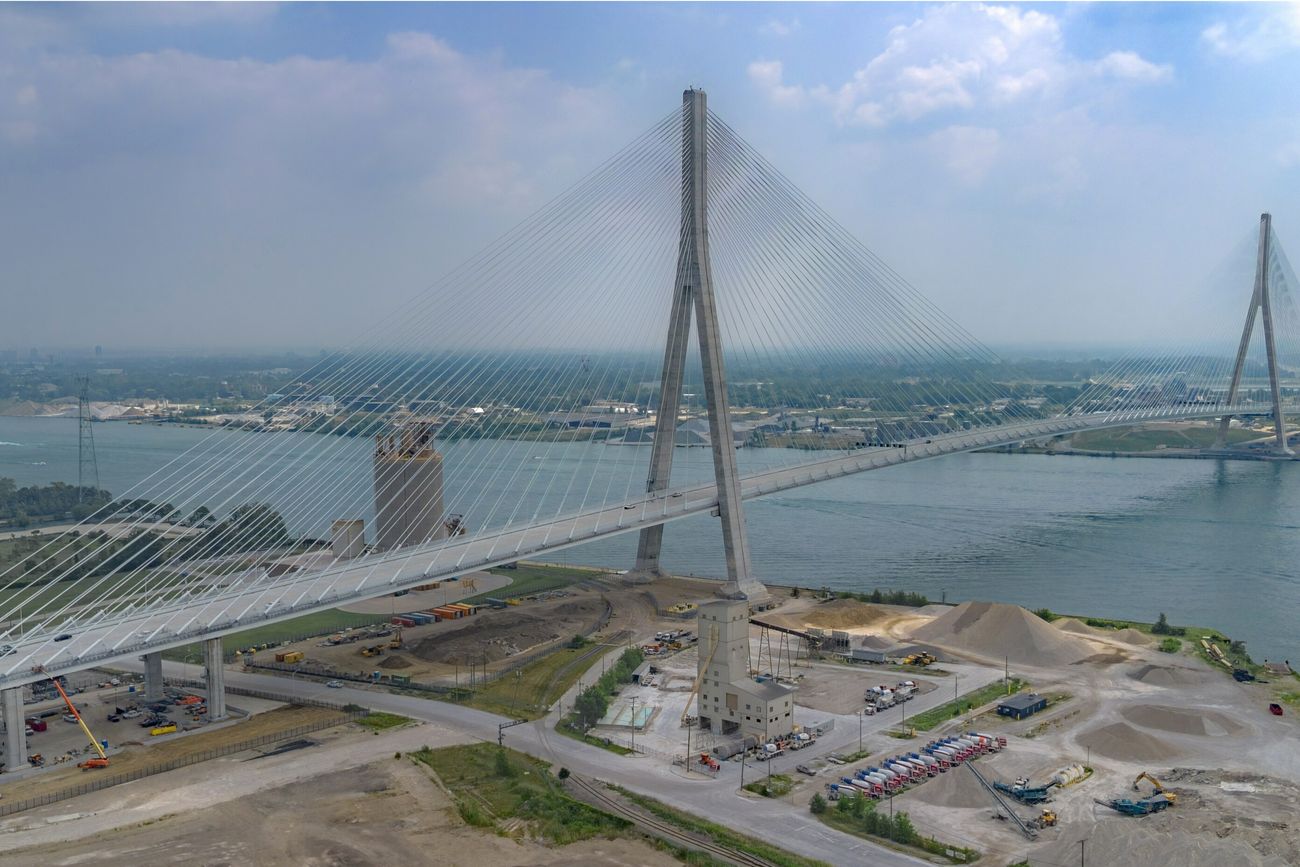
For ninety-seven years, if you wanted to drive from Detroit to Canada you used the Ambassador Bridge. It opened in 1929, it is privately owned, and for most of the last century it has been the busiest commercial crossing on the United States–Canada border. There was no alternative. That is an unusual amount of leverage for one company to hold over two national economies.
That changed this year. The Gordie Howe International Bridge now carries traffic between Delray and Windsor, and it is the first new road crossing between the two cities since the Ambassador went up.
The unusual part is who paid
Canada funded the construction and recovers the cost through tolls. A bridge between two countries, sitting half in Michigan, built with another nation's money — that is not how most infrastructure on this side of the river gets financed, and it is the single most interesting fact about the project.
It also means the crossing is publicly owned, which is the part that actually matters to anyone moving freight. The Ambassador's ownership has been a live political question in Detroit and Windsor for decades. There is now a second option.
It was late, and that is worth saying plainly
The bridge missed a September 2025 target. Reporting at the turn of the year had it at 98 percent complete, with an opening projected as early as the first quarter of 2026.
A year's delay on a project of this size is not a scandal, but it is the sort of detail that quietly disappears from the record once a thing is open and working. It is in this piece because it happened.
What it does not fix
A bridge moves trucks. It does not move people around Detroit, and nothing about this project changes how a Detroiter without a car gets to a job in Windsor, or to one in Corktown for that matter.
The only item on the city's current construction list that is really about moving people is the Michigan Central hub, which is meant to bring Amtrak service back to the station. That is a much smaller project, and it will get a fraction of the attention this bridge got.
A crossing is not a transport plan. It is one piece of one.
The honest summary: Detroit gained a serious piece of international infrastructure, paid for by somebody else, a year behind schedule, and the region's actual mobility problem is exactly where it was in 2024.